
Case study · Practitioner's journal
Unbalanced Body Shape
Uneven shoulders from desk work
Six months of desk work had left one shoulder sitting higher than the other. Here is how we assessed it, what we found, and the treatment plan we built.
- Patient
- Female, 38
- Work
- Office, 8–10 h a day at a computer
- Duration
- About 6 months
- Pain at worst
- 4 / 10
Why she came to see us
Our patient is a 38-year-old office worker who spends eight to ten hours a day at a computer. Over about six months she noticed her right shoulder sitting higher than her left. A friend pointed it out, and she could see it in photos. There was no fall or injury; it crept up gradually.
Along with the uneven look came a dull ache and tightness on the right side of the neck and upper shoulder. It was worse in the afternoon and after long stretches of sitting, reaching about 4 out of 10 at its worst, with occasional tension headaches at the back of the head. She had no numbness, tingling or weakness in the arm.
Two daily habits stood out: she always carried her bag on the right shoulder, and she often rested her head on her right hand while working.
Her sleep was fair, appetite and digestion normal, and she tended to have cold hands and feet. She had not taken painkillers or tried acupuncture before.
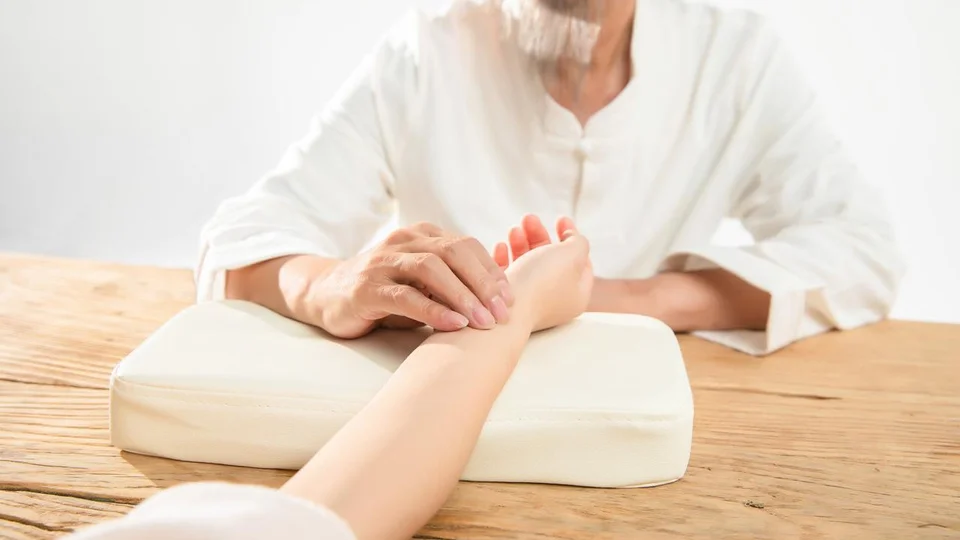
What we found
- PostureRight shoulder about 1.5 cm higher than the left, mild head tilt to the left, forward head posture. Right shoulder blade slightly raised and rounded forward.
- MusclesTight, tender bands in the right upper trapezius, levator scapulae and rhomboids, with mild tenderness beside the lower neck (C5–C7).
- MovementBending the neck to the left slightly limited (about 35°). Shoulder movement full and pain-free on both sides.
- NervesArm strength, sensation and reflexes normal; Spurling's test negative, so no sign of a trapped nerve.
- Tongue & pulsePale-dark tongue with a thin white coat; wiry, slightly thin pulse.
Our diagnosis
Traditional Chinese Medicine
Shoulder and neck sinew tension (Jian Bei Jing Jin Ju Ji) with local qi and blood stagnation, plus mild blood deficiency that leaves the sinews under-nourished.
Put simply: the muscles on one side are holding on, circulation through them has slowed, and they are not getting enough nourishment to let go.
Western view
Postural imbalance: overactive right upper trapezius and levator scapulae from long hours in a fixed position. These muscles lift the shoulder blade, so when they stay tight the shoulder rides higher.
No scoliosis, fracture or nerve involvement.
Where we needle, and why
Our aim: relax the sinews, get qi and blood moving, open the meridians and nourish the blood. Local points work directly on the tight muscles of the high side; points on both sides, and on the hands and legs, balance the whole body.
Right (high) side
- GB21 Jianjing top of the shoulder
- SI14 Jianwaishu upper inner shoulder blade
- SI11 Tianzong centre of the shoulder blade
- LI15 Jianyu front of the shoulder joint
Both sides
- GB20 Fengchi base of the skull
- Jiaji C5–T3 beside the spine, neck to upper back
- LI4 Hegu hand
- GB34 Yanglingquan outer knee
- ST36 Zusanli below the knee
- SP6 Sanyinjiao inner ankle
Plus Ashi points: the most tender spots found by touch on the day.
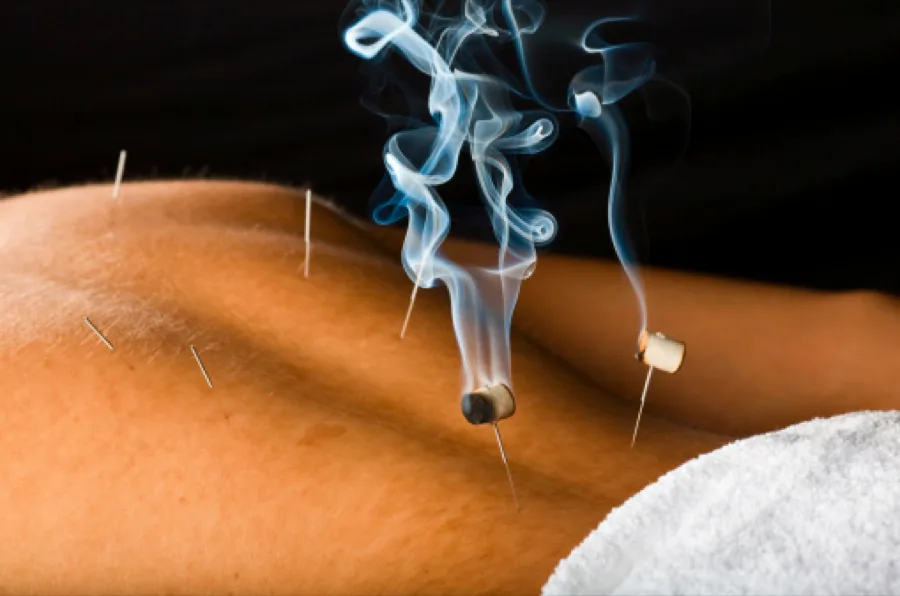
Alongside the needles
Acupuncture releases the tight bands and improves local circulation.
Moxibustion over the right shoulder and upper back warms and nourishes the sinews, which suits her tendency to cold hands and feet.
Gentle tuina or cupping on the trapezius, as tolerated, to loosen the muscle further.
Eight weeks, reviewed after session 6
Weeks 1–4: two sessions a week. Weeks 5–8: one session a week. We review progress after the sixth session and adjust the plan.
Homework
Treatment loosens the muscles; daily habits keep them that way. We gave her six simple changes:
Move every 30–45 minutes
Stand up, roll the shoulders and stretch before the muscles lock into one position.
Screen at eye level
Raise the monitor and keep the keyboard close, so the head is not pushed forward.
Share the load
Swap the bag between shoulders, or use a backpack worn on both.
Hands off the chin
Resting the head on one hand tilts the neck and lifts that shoulder.
Daily stretches
Shoulder-blade squeezes and a gentle levator scapulae stretch, morning and evening.
Keep warm
In TCM, cold tightens the sinews; a scarf or warm compress helps the neck relax.
We also asked her to see a doctor straight away if she ever notices arm numbness, weakness or worsening pain.
What we are aiming for
- 2 weeksMuscle tightness eased and pain down to 2/10 or less.
- 6–8 weeksShoulder height difference under 0.5 cm and equal neck movement on both sides.
- Long termBetter posture habits that keep the problem from coming back.
Next entries
We will add her progress to this journal as treatment goes on.
Every body is different, and results vary from person to person. Patient details are anonymised. Photos are illustrative, not of this patient.
Does one shoulder sit higher than the other?
Neck and shoulder tension from desk work is one of the most common things we treat. Book an assessment and we will find out what is pulling you out of balance.