
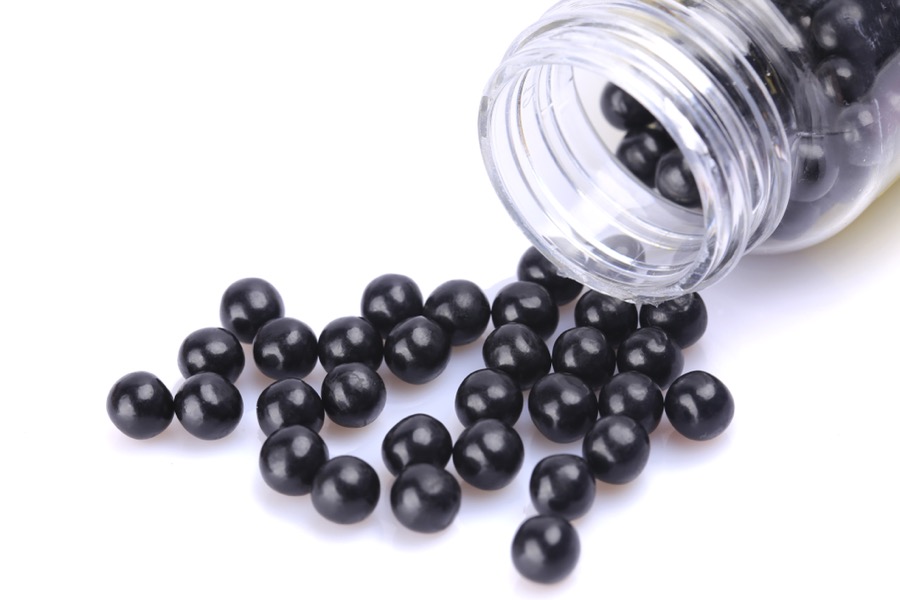
Herbal Pills
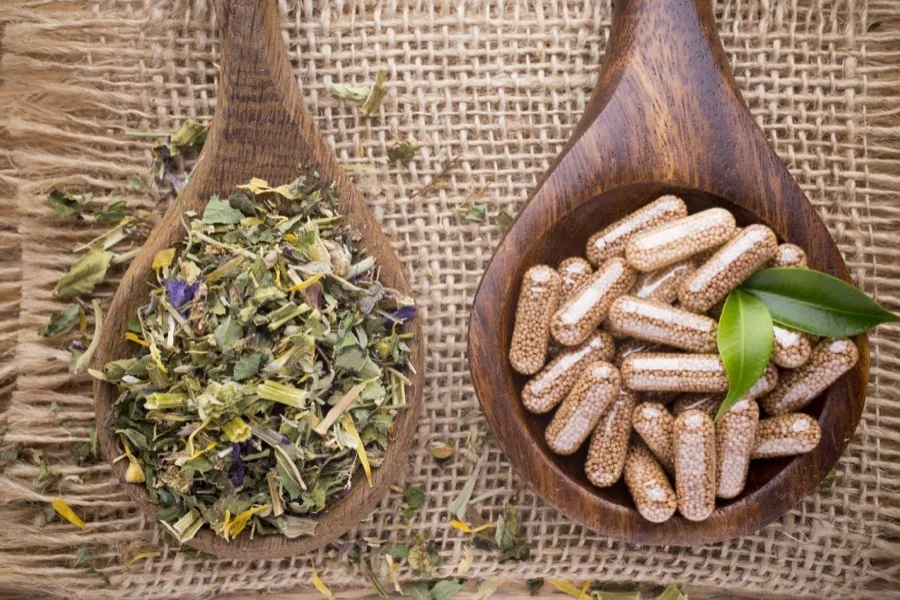
Classical Chinese herbal formulas in pill form, made with honey, water or concentrated extract. Pills act gently and steadily and are easy to take, so they suit longer-term care. Your practitioner will choose the formula that matches your diagnosis.
Book an appointment →Understanding Herbal Pills
-
Traditional Background
How Did Herbal Pills Develop?
Pills (wan, 丸) are one of the classical ways of preparing Chinese herbal medicine. Powdered herbs were traditionally bound with honey or water and rolled into pills, which kept well and could be carried easily. Many formulas still taken today were first written as pills in Song dynasty texts, including Liu Wei Di Huang Wan, recorded by the paediatrician Qian Yi in the early 12th century.
A classical saying holds that “pills act gently” (丸者缓也). Compared with decoctions, pills were seen as a slower, steadier way to take herbs, well suited to long-standing patterns and to continuing treatment once the main symptoms have settled. Our herbal pills follow this tradition: each formula is based on classical prescriptions and clinical experience, and your practitioner selects it according to your diagnosis and body constitution.
Classicalformulas based on centuries of recorded useSelectedchosen for your TCM diagnosis and constitutionGentlea steady approach suited to longer-term patternsPortableno brewing; easy at work, when travelling or overseasFigure 1. What sets herbal pills apart in the Chinese medicine tradition.
-
Types of pill
Honey Pills, Water Pills and Concentrated Pills
Chinese herbal pills are made in several traditional ways, and the method affects how they are taken and how quickly they act:
- Big honey pills (大蜜丸, da mi wan): finely powdered herbs are kneaded with refined honey into a soft dough and shaped into large, individually wrapped pills, often a few grams each. Honey binds the herbs, keeps the pill moist and adds a gentle nourishing quality, so many tonic formulas are made this way. They are chewed, or cut into small pieces and swallowed with warm water.
- Small honey pills (小蜜丸, xiao mi wan): the same honey base rolled into small, pea-sized pills, which are easier to swallow.
- Water pills (水丸, shui wan): powdered herbs are bound with water (sometimes with a little vinegar, wine or herbal liquid) and built up layer by layer into small, firm pills, often called teapills. They break down more quickly than honey pills and are easy to digest.
- Concentrated pills (浓缩丸, nong suo wan): some or all of the herbs are first decocted and the extract concentrated, then formed into small pills. Because they are concentrated, the dose is a smaller number of pills.
Big honey pillslarge, soft and nourishing; chewed or cut upSmall honey pillssame honey base, easier to swallowWater pillssmall, firm and quick to break downConcentrated pillsmade from extract, so fewer pills per doseFigure 2. The four traditional types of Chinese herbal pill.
-
Choosing a form
How Do Pills Compare with Granules and Decoctions?
A classical saying contrasts the two ends of the scale: “decoctions wash away” (汤者荡也), acting strongly and quickly, while “pills act gently” (丸者缓也). Each form has its place:
One formula
three ways to take itRaw-herb decoctionStrongest and quickest acting, and fully adjustable, but takes time to cook and has a strong taste. Often chosen for acute or complex problems. More about raw herbs.Granules or powderConcentrated extract that dissolves in warm water. Still tailored to you, and much quicker to prepare. More about customised prescriptions.PillsGentle and steady, with little or no taste, no preparation and a long shelf life. Usually a fixed classical formula, well suited to long-term and chronic care.Figure 3. How pills compare with granules and raw-herb decoctions.
Many patients start with a decoction or granules while symptoms are active, then move on to pills to keep things steady once they have improved.
-
Modern Scientific Perspective
How Do Herbal Pills Work?
A herbal pill contains the same kinds of plant compounds as the equivalent decoction, in a concentrated and measured form. Manufacturing in pill form offers more consistent dosing, but it also means quality depends heavily on the manufacturer. Reviews have reported that some unregulated Asian herbal products have been contaminated with heavy metals or undeclared pharmaceutical drugs[1], which is why sourcing matters.
Herbal pill
a classical formula in measured dosesQuality controlWe use reputable suppliers that provide quality testing of their herbs.Right formulaYour practitioner matches the formula to your pattern instead of a one-size-fits-all product.Interaction checkYour other medicines are reviewed, as some herbs can interact with prescribed drugs[2].Figure 4. The safeguards behind each herbal pill we prescribe.
The research picture is mixed. A Cochrane review found promising evidence for Chinese herbal medicine in period pain, but the included trials were often small and of poor quality[3]. A systematic review of Chinese herbal medicine for insomnia concluded that the current evidence is insufficient to confirm benefit, although adverse events were no more frequent than with placebo[4]. We see herbal pills as one part of a treatment plan, used with your GP’s knowledge and never in place of necessary medical care.
References
- Ernst E. Toxic heavy metals and undeclared drugs in Asian herbal medicines. Trends in Pharmacological Sciences. 2002;23(3):136–139. doi.org/10.1016/S0165-6147(00)01972-6
- Izzo AA, Ernst E. Interactions between herbal medicines and prescribed drugs: an updated systematic review. Drugs. 2009;69(13):1777–1798. doi.org/10.2165/11317010-000000000-00000
- Zhu X, Proctor M, Bensoussan A, Wu E, Smith CA. Chinese herbal medicine for primary dysmenorrhoea. Cochrane Database of Systematic Reviews. 2008;(2):CD005288. doi.org/10.1002/14651858.CD005288.pub3
- Yeung WF, Chung KF, Poon MMK, Ho FYY, Zhang SP, Zhang ZJ, Ziea ETC, Wong VT. Chinese herbal medicine for insomnia: a systematic review of randomized controlled trials. Sleep Medicine Reviews. 2012;16(6):497–507. doi.org/10.1016/j.smrv.2011.12.005
What you need to know
- 1Before you start
What to Prepare
Herbal pills are recommended after a consultation in which your practitioner asks about your health, looks at your tongue and takes your pulse.
Please list all medicines, vitamins and supplements you take, and tell your practitioner if you are pregnant, trying to conceive, breastfeeding, diabetic, or taking blood thinners.
- 2Taking your pills
How to Take Them
- Take the number of pills your practitioner advises, usually two or three times a day, with warm water.
- Chew big honey pills, or cut them into small pieces before swallowing. Small honey pills, water pills and concentrated pills are swallowed whole.
- Keep pills sealed, in a cool, dry place.
- Raw food, cold drinks, spicy food and alcohol may slow your progress; warm, cooked meals are best.
- 3Follow-up
Reviewing Your Progress
- Pills act gently, so give them a few weeks. Your practitioner will review how you are getting on.
- Your formula may be changed, or combined with a customised prescription, as your condition develops.
- Stop and contact us if you feel unwell, develop a rash or have digestive upset.
Keep your GP informed that you are taking Chinese herbal medicine.
Conditions herbal pills are often used for
Herbal pills are a practical choice for longer-term patterns, for continuing treatment once symptoms have eased, and for patients who cannot easily prepare herbs. These are some of the most common reasons our patients choose them.
Digestive problems
Bloating, indigestion and irregular bowel habits.
Learn more →
Painful or irregular periods
Herbal formulas are widely used in TCM for period pain and cycle irregularity.
Learn more →
PMS
Mood changes, bloating and breast tenderness before your period.
Learn more →
Menopausal symptoms
Hot flushes, night sweats and restlessness.
Learn more →
Poor sleep
Difficulty falling or staying asleep, often linked in TCM to an unsettled Heart and Liver.
Learn more →
Stress & low mood
Tension and irritability that TCM associates with stagnant Liver Qi.
Learn more →
Skin complaints
Recurring breakouts or dry, itchy skin, often alongside other care.
Learn more →
Fatigue & low energy
Ongoing tiredness that TCM links to deficient Qi or Blood.
Learn more →Your practitioner will assess whether herbal pills are right for you at your consultation.
Frequently asked questions
What is the difference between honey pills and water pills?
How do I take a big honey pill?
I am diabetic. Can I take honey pills?
Are pills weaker than a decoction?
How long will I need to take herbal pills?
Are herbal pills safe and good quality?
Still have a question? Ask our practitioners.
What our patients say on Google
I had acupuncture and cupping with Emma, and she truly worked wonders on my back and neck. I came in barely able to turn my head, and now I feel so much better relaxed, pain-free, and mobile again. I’d had a bad experience elsewhere before, but Emma completely turned things around. Highly recommend!
I am very satisfied with the herbal remedies for perimenopause. I don't have hot flashes after the medication. And electric acupuncture soothes my plantar fascists on both feet. The capsules for bowel movement are working very well.
The staff specially Yao meng did an excellent job. In addition she is very kind and explain to the patients what to expect. Thank you very much.
I highly recommend Acupro. They are very professional and take the time to tailor your treatment for you.
More herbal medicine treatments
Ready to try Herbal Pills?
Not sure what to book? Just choose the initial treatment closest to your concern: Women's Health, Pain, Skin Condition or General Wellness. Your practitioner will recommend whether Herbal Pills treatment suits you during your consultation, so there's no need to decide now.
- Fully licensed practitioners
- Covered by private health insurance